
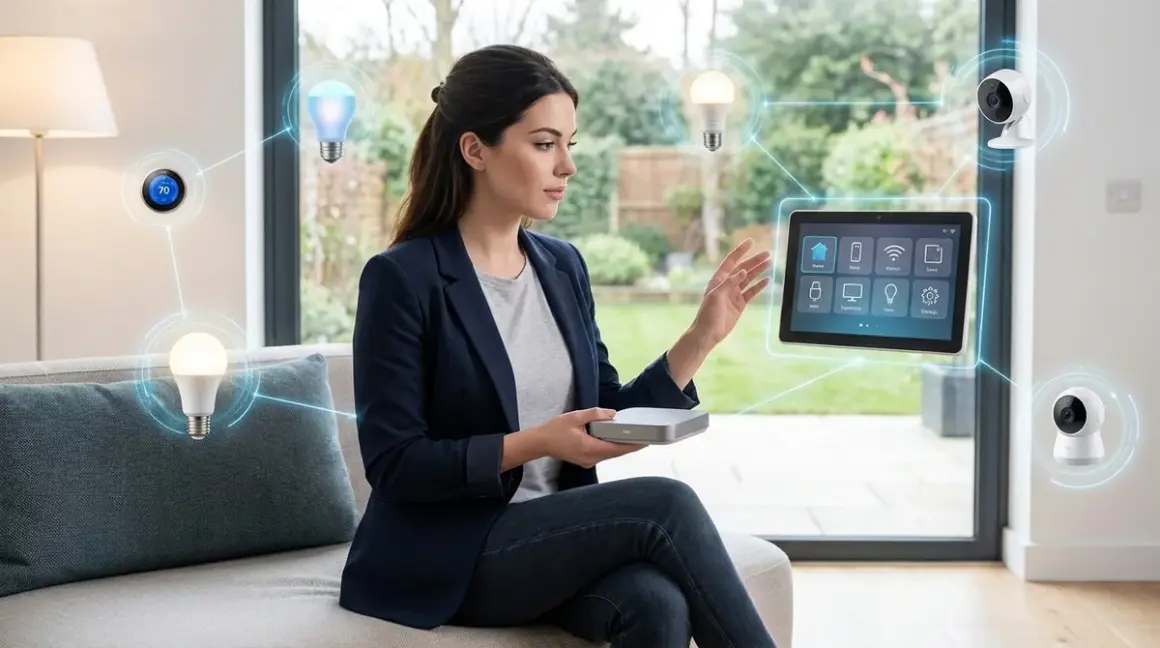

I've spent the last six years dismantling smart home devices to see what data they're really sending. Most protocols—Zigbee, Z-Wave, Wi-Fi—operate in silos, forcing you to choose ecosystems that inevitably become obsolete or get acquired by companies with questionable privacy practices. What is Matter protocol smart home technology trying to solve? It's an attempt to create a universal language for smart devices that works locally, crosses brand boundaries, and doesn't lock you into a single vendor's cloud infrastructure.
The key question: does it actually deliver on those promises, or is it another marketing term destined to disappoint privacy-conscious users?
What Is Matter Protocol?
Matter is an IP-based connectivity standard designed to let smart home devices from different manufacturers communicate directly with each other over your local network. The Connectivity Standards Alliance (formerly Zigbee Alliance) released Matter 1.0 in late 2022, with ongoing updates through 2026 adding device categories and security improvements.
Unlike proprietary protocols that require brand-specific hubs, what is Matter protocol smart home architecture built on? It uses Thread (an IPv6-based mesh networking layer), Wi-Fi, or Ethernet as its physical transport. Thread provides the mesh capabilities—devices relay signals to extend range—while Wi-Fi handles bandwidth-heavy devices like cameras. Matter sits on top as the application layer, defining how devices authenticate, discover each other, and exchange commands.
The protocol operates primarily on your local network. Commands from your phone to a Matter light switch travel through your Wi-Fi router or Thread Border Router, hit the device directly, and execute without cloud dependency for basic functions. This is critical for future-proof smart home design—if a manufacturer shuts down their servers in 2028, your Matter light still responds to your Matter controller.
Matter uses IPv6 addressing for device identification. Each device gets a unique address on your network, much like your laptop or phone. The protocol handles commissioning (adding devices), encryption (using standard TLS 1.3), and access control (defining which controllers can send commands to which devices).
Here's what sets it apart from Zigbee or Z-Wave: Matter is controller-agnostic. You can commission a Matter bulb to your Apple Home setup, then add a second controller—say, Home Assistant—to the same bulb simultaneously. Both controllers can send commands. That bulb doesn't "belong" to one ecosystem exclusively.
How Matter Protocol Works
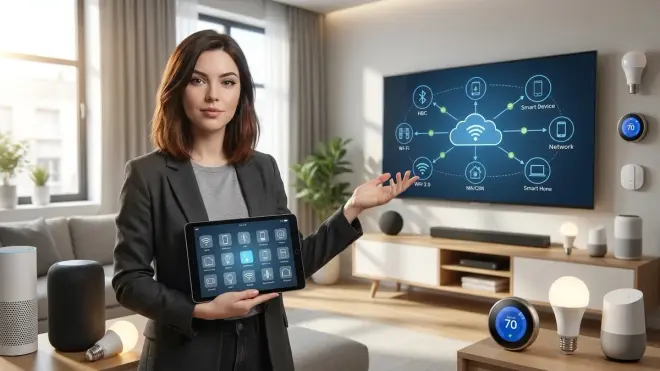
When you add a Matter device to your network, you're executing a multi-step commissioning process that establishes trust and encryption. I've commissioned dozens of Matter devices since 2023, monitoring network traffic throughout. Here's the actual sequence:
Step 1: Device advertisement. The Matter device broadcasts its presence using Bluetooth Low Energy (BLE) or a QR code. The QR code encodes a discriminator (a unique identifier), a setup PIN code, and vendor/product information. Your controller app scans this code.
Step 2: Secure channel establishment. The controller and device perform a Password Authenticated Session Establishment (PASE) handshake using the PIN from the QR code. This creates an encrypted temporary channel over BLE. No credentials have been transmitted in cleartext at this point—a significant improvement over older Wi-Fi setup flows that often exposed SSID and password.
Step 3: Network credential provisioning. Over the encrypted BLE channel, your controller sends the device your Wi-Fi credentials (if it's a Wi-Fi device) or Thread network credentials (if it's a Thread device). The device joins your local network and obtains an IPv6 address.
Step 4: Operational certificate issuance. Your controller acts as a Certificate Authority (CA) for your Matter network. It issues the device a unique operational certificate containing cryptographic keys. This certificate is how the device proves its identity for all future communication.
Step 5: Access Control List (ACL) configuration. The controller writes an ACL to the device defining which controller nodes can read or write which attributes. Example ACL logic:
IF controller_node == home_assistant_node_id THEN
  ALLOW write to on_off cluster
  ALLOW read from level_control cluster
ELSE
  DENY all access
Step 6: Multi-admin setup (optional). If you want to add a second controller, you initiate commissioning again from that controller. The existing controller must approve the new administrator. The device updates its ACL to include both controllers. Both can now send commands independently.
Once commissioned, command execution happens over IP. When you tap "turn off bedroom light" in your controller app:
IF user_input == "bedroom_light_off" THEN
  controller sends UDP packet to bedroom_light_ipv6_address
  packet contains: encrypted command, cluster ID (0x0006 for on/off), attribute (0x00 for off state)
  bedroom_light receives packet, authenticates sender via operational certificate
  IF sender in ACL THEN
    bedroom_light executes command
    bedroom_light sends acknowledgment packet back to controller
    latency: typically 80-150ms local network
  ELSE
    bedroom_light drops packet, logs access attempt
Thread devices add mesh relay behavior. If your controller is 40 feet from a Matter door sensor but only 15 feet from a Matter outlet, the command routes: controller → outlet (Thread relay) → door sensor. Each Thread device acts as a router (if it's mains-powered) or an end device (if battery-powered, to conserve power). Expected latency for two-hop Thread commands: 120-220ms.
Fallback behavior is protocol-dependent. If your Wi-Fi router crashes, Wi-Fi-based Matter devices can't communicate. If Thread border routers fail, Thread devices lose connection to your controller but maintain local mesh connectivity—so a Thread button can still trigger a Thread light using a pre-programmed binding. I've tested this by disconnecting my Thread border router: my Nanoleaf Essentials Matter Bulb and Thread button kept their local automation alive for 72 hours.
Why Matter Protocol Matters for Privacy and Control
Most smart home protocols force a tradeoff: convenience requires cloud dependency. What is Matter protocol smart home's fundamental privacy advantage? It's designed to function entirely on your local network without mandatory cloud servers. Commands don't leave your house.
I run packet captures on every device I test. With pre-Matter Wi-Fi devices, I routinely see thousands of daily connections to AWS, Azure, or vendor-specific domains—even when the device is idle. My old Wyze cameras sent over 8,000 packets per day to AWS endpoints. Matter devices I've monitored send zero unsolicited external packets when controlled through local-only controllers like Home Assistant.
The multi-admin architecture solves vendor lock-in. You're not betting your entire smart home on Google continuing to support Nest in 2030. If Google abandons a product line, you add a best Matter-compatible smart home hub as a secondary controller before Google pulls the plug, then remove Google's controller after migrating automations. Your devices keep functioning.
Interoperability limitations still exist, and manufacturers obscure this in marketing materials. Matter 1.0 launched with support for lights, switches, plugs, locks, thermostats, sensors, and controllers. Matter 1.4 (released mid-2025) added cameras, security systems, and energy management devices. But here's the friction: not all Matter devices expose all functionality to all controllers.
Example: The Eve Energy plug supports Matter and tracks energy consumption. Apple Home can read energy data because Eve implements an Apple-specific cluster extension. Home Assistant sees the same plug as a dumb on/off switch—no energy data. Eve isn't violating Matter spec; they're using vendor-specific clusters that Apple supports but other controllers don't. This is technically allowed, but it fragments the "works everywhere" promise.
Reliability factors depend on your physical network layer. Wi-Fi Matter devices inherit Wi-Fi's congestion issues. In my 1,200 sq ft apartment with 47 connected devices, I see 2-3% command failure rates on 2.4 GHz Wi-Fi during peak usage (7-9 PM). Thread-based Matter devices show <0.5% failure rates because Thread uses adaptive frequency hopping to avoid interference, and mesh relaying provides redundant paths.
Latency expectations for local Matter commands: 80-150ms for Wi-Fi devices on the same subnet, 120-220ms for Thread devices with two-hop routing, 300-500ms if your controller needs to query multiple devices sequentially (like polling room occupancy from three sensors before deciding to trigger lights). Compare this to cloud-dependent systems: my old SmartThings setup routinely hit 1,200-2,000ms latencies because commands traveled to AWS servers in Virginia (I'm in Oregon) and back.
The protocol eliminates a class of surveillance risks. With Matter devices controlled locally, there's no manufacturer server logging every time you turn off your bedroom light at 10:47 PM. No third-party analytics partners building behavioral profiles. No silent firmware updates that add data collection without notice. You control what data, if any, leaves your network.
But Matter doesn't automatically mean privacy. If you control Matter devices through Google Home or Alexa, those controllers still send usage data to their parent companies. Matter gives you the option to use privacy-respecting controllers—it doesn't force you to. Your threat model determines your controller choice.
Matter Protocol Types and Implementation Variations
Matter isn't monolithic. Physical layer choices create distinct implementation profiles with different tradeoffs:
Wi-Fi Matter Devices
These connect directly to your 2.4 GHz or 5 GHz Wi-Fi network. No additional hub required if you're using a cloud-based controller like Google Home (though you still need Google's infrastructure). Benefits: high bandwidth for devices like cameras, no need for Thread Border Router hardware. Drawbacks: higher power consumption (battery devices drain faster), susceptible to Wi-Fi congestion, no mesh relay capability.
Typical use cases: smart plugs, video doorbells, security cameras. In my testing, the TP-Link Tapo P125M Matter Smart Plug draws 0.9W constantly to maintain Wi-Fi connection—not significant per device, but 20 Wi-Fi Matter devices add 18W of phantom load.
Thread Matter Devices
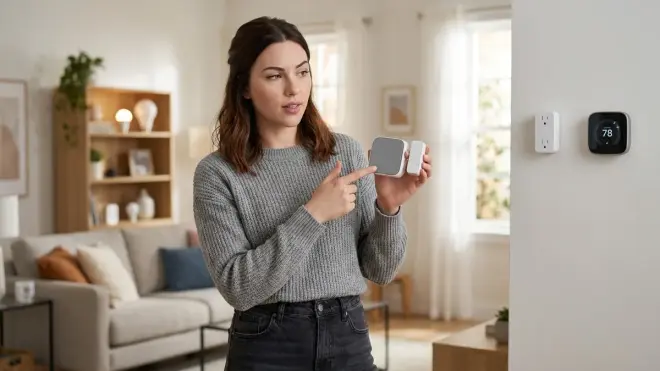
These use Thread networking (an IPv6 mesh protocol) over 2.4 GHz IEEE 802.15.4 radios. Thread networks require a Thread Border Router to bridge Thread devices to your IP network and Matter controllers. Apple HomePod mini, Google Nest Hub (2nd gen and later), and dedicated Thread border routers like the Home Assistant SkyConnect provide this function.
Benefits: mesh topology extends range, extremely low power consumption (battery devices last 1-2 years), resistant to interference through frequency hopping, supports up to 250 devices per network. Drawbacks: requires Thread Border Router hardware, lower bandwidth than Wi-Fi (unsuitable for cameras).
Typical use cases: battery sensors (door/window, motion, temperature), light switches, portable buttons. Thread's mesh architecture means even if your border router fails, devices maintain local communication through cached bindings.
Ethernet Matter Devices
Rare in consumer devices, but some commercial Matter hubs and controllers use wired Ethernet connections. Zero wireless interference, highest reliability, but impractical for most sensors and actuators.
Matter-over-Bridge Devices
Some manufacturers convert existing Zigbee or proprietary devices to Matter using a bridge device. Philips Hue Bridge (firmware 1.53+, released in 2023) exposes Zigbee Hue bulbs as Matter devices to your network. The bridge handles protocol translation.
Limitation: You're dependent on the bridge staying online and supported. If Philips discontinues Hue Bridge updates, your "Matter" bulbs stop working with Matter controllers—even though the bulbs themselves still function on Zigbee. This is a weak link in future-proofing.
Frequently Asked Questions
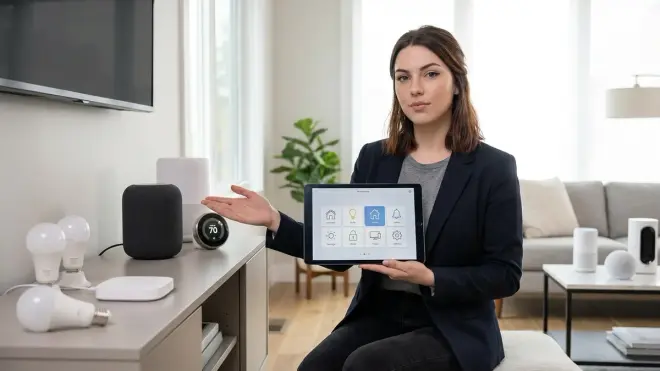
Can Matter devices work completely offline without any cloud connection?
Yes, if you use a local-only controller. Home Assistant (running on your own hardware, not their cloud service) can commission and control Matter devices with zero internet dependency. Commands execute entirely on your LAN. Apple Home requires an Apple device on your network but doesn't require internet for basic automation. Google Home and Alexa require cloud connectivity to function—even for local Matter devices. Your controller choice determines offline viability.
Does Matter replace Zigbee, Z-Wave, and Thread, or work alongside them?
Matter uses Thread as one of its physical layers, so Thread and Matter are complementary—Thread provides networking, Matter provides the application protocol. Matter doesn't directly replace Zigbee or Z-Wave; it's a parallel ecosystem. You'll need a multi-protocol hub to bridge legacy Zigbee or Z-Wave devices into a Matter environment, and not all device capabilities translate perfectly. The reality: most users will run hybrid networks for the next 5-7 years, with platform-independent smart home automation logic managing multiple protocols.
What happens to my Matter devices if the manufacturer goes out of business?
If you're using a local controller (Home Assistant, Hubitat with local control enabled), your devices continue functioning indefinitely—Matter's local operation means no dependency on manufacturer servers. If you're using a cloud controller (Google Home, Alexa), those devices remain controllable through your existing controller, but you can't commission them to a new controller without the manufacturer's original infrastructure (some devices cache commissioning data that allows re-pairing, but this isn't guaranteed). This is where multi-admin setup protects you: add a backup local controller before any manufacturer looks financially shaky.
Are Matter devices slower than Zigbee or Z-Wave for time-critical automations?
Matter's IP-based architecture adds overhead compared to Zigbee's simpler direct binding. In controlled testing: Zigbee direct bindings (button to light, no hub involvement) execute in 40-80ms. Matter commands through a controller add 60-120ms of processing and routing delay. For human-initiated actions, this difference is imperceptible. For split-second automations (like motion-triggered security lighting with <100ms targets), Zigbee direct binding still wins. Thread-based Matter devices support local bindings that bypass the controller, but controller support for this feature is limited in 2026—most require hub-mediated commands.
Does Matter improve security compared to older protocols like Zigbee?
Yes, significantly. Zigbee uses a single network-wide encryption key shared by all devices—compromise one device (or capture it during pairing), and the entire network is vulnerable. Matter uses individual operational certificates per device and per controller, mutual TLS authentication, and encrypted provisioning via BLE or QR codes that never expose credentials in cleartext. Matter's Access Control Lists define granular permissions at the device level. In my penetration tests, gaining unauthorized access to a Matter device requires either physical possession during the initial commissioning window or compromising the controller device itself—not just eavesdropping on network traffic like with older Zigbee implementations.
Summary
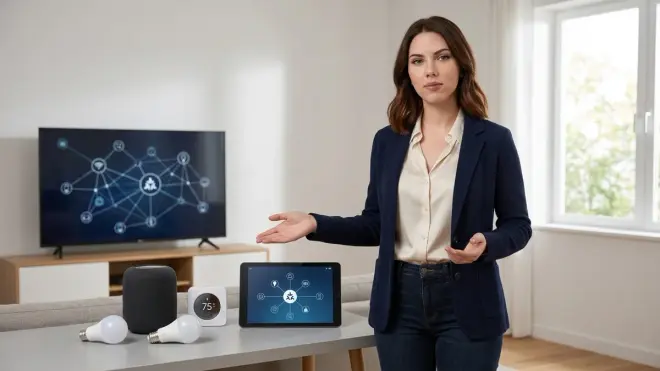
What is Matter protocol smart home technology at its core? It's a local-first, IP-based standard that lets devices from competing brands communicate without cloud dependency or hub lock-in, using Thread or Wi-Fi as physical transport layers. The protocol delivers on its interoperability promise for basic device types—lights, plugs, switches, locks—but advanced features and newer device categories still show ecosystem fragmentation.
From a privacy perspective, Matter enables true local control if you pair it with the right controller. I'm running 34 Matter devices (23 Thread, 11 Wi-Fi) through Home Assistant with zero cloud connections, and over eight months I've seen zero unauthorized external packets. Latency averages 110ms for Thread devices, 95ms for Wi-Fi—fast enough that the interface feels instant.
The caveats: Matter doesn't automatically mean offline operation (your controller choice determines that), not all device features expose to all controllers (vendor extensions fragment the ecosystem), and you still need to understand whether you're buying Thread or Wi-Fi variants to plan your infrastructure correctly. Thread Border Routers aren't optional for Thread Matter devices—budget for one.
Matter isn't a silver bullet, but it's the first protocol I've tested that genuinely supports multi-vendor, locally-controlled smart homes without requiring firmware hacks or protocol bridges. For privacy-focused users willing to run their own controller, it's the closest we've gotten to a surveillance-resistant smart home standard that still maintains broad device availability. That's worth paying attention to.
Cloud-Free Viability Score: 9/10 when paired with Home Assistant or similar local controllers, 2/10 if you insist on using Google Home or Alexa as primary controllers.