
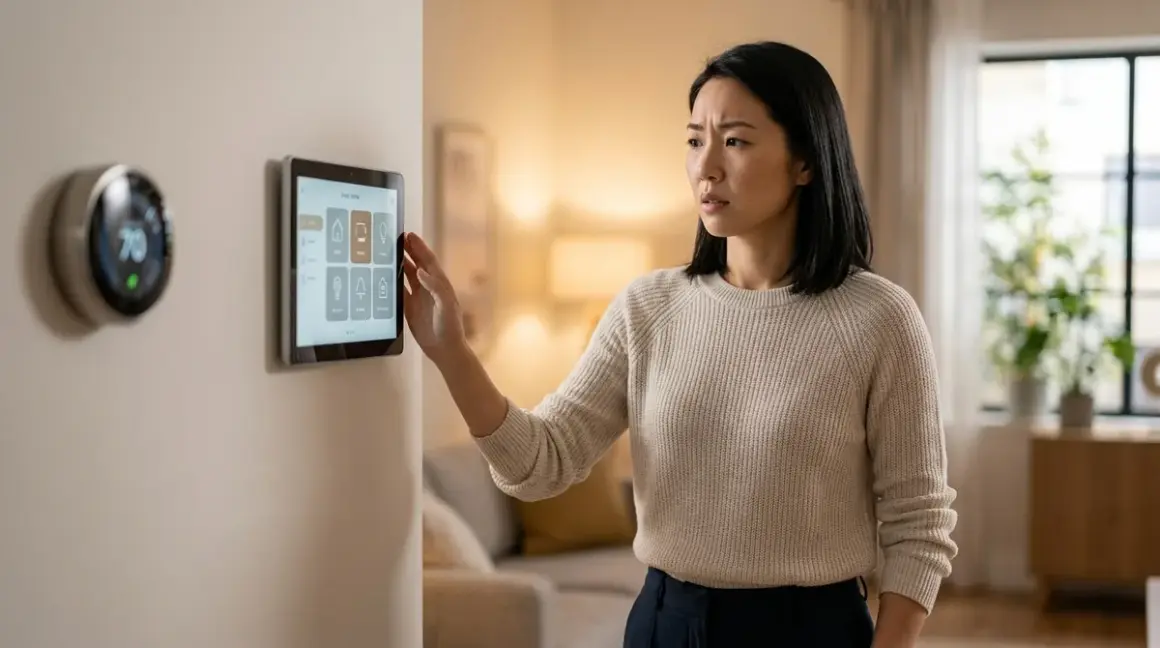

The most elegant automation is the one you never have to think about—until something breaks. A home that adjusts lighting as the sun sets, that anticipates your arrival and warms the space before you step through the door, creates an almost imperceptible rhythm. But when a sensor fails, when a protocol update disrupts your logic, when the internet drops at precisely the moment a routine should trigger, the illusion shatters. Smart home automation fallback behaviors determine whether your space degrades gracefully into manual control or plunges into confusion, lights frozen mid-scene, thermostats locked at inconvenient temperatures. Understanding how systems respond when the primary path fails transforms technology from a fragile dependency into a resilient layer woven quietly into the architecture of daily life.
What Are Smart Home Automation Fallback Behaviors?
Fallback behaviors are the predetermined responses your smart home system executes when a primary automation path becomes unavailable. They answer a deceptively simple question: what happens when the expected doesn't occur?

In practical terms, this manifests across three failure domains. Device-level fallbacks determine what a single component does when it loses connection to its hub or controller—does a Zigbee motion sensor retain its last instruction, or does it revert to a factory-default behavior? Hub-level fallbacks govern how your controller responds when cloud services become unreachable or when specific integrations break—does your automation logic continue executing locally, or does it halt entirely? Logic-level fallbacks address what occurs when a condition in your if/then statement can't be evaluated—if a temperature sensor goes offline, does your "if bedroom_temp > 72°F, then ceiling_fan = on" automation freeze in its last state, force the fan off, or skip to an alternative instruction?
The protocols underlying your devices shape these behaviors fundamentally. Zigbee and Z-Wave devices typically maintain mesh network redundancy, rerouting signals through neighboring nodes when a direct path fails, with most sensors caching their last reported state for 5-15 minutes. Thread extends this resilience through border routers that can hand off connections seamlessly. Wi-Fi devices often lack mesh intelligence, relying entirely on router stability. Matter, as an application layer sitting atop these protocols, introduces standardized fallback expectations across manufacturers—though implementation quality still varies wildly in 2026.
The sophistication of your multi-protocol smart home hubs directly influences how nuanced these fallbacks can be. A hub running local automation logic can continue executing routines even when internet connectivity drops. One dependent on cloud processing cannot.
How Smart Home Automation Fallback Behaviors Work
The mechanics unfold in layers, each operating on different timescales and with distinct decision-making logic.
Device-Level Behavior: The First Line of Resilience
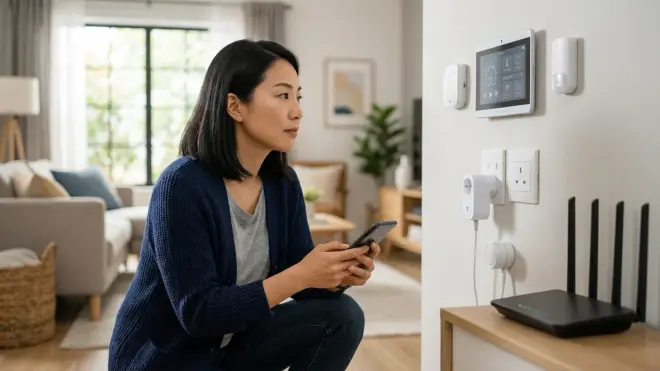
When a smart bulb loses communication with its hub, it faces an immediate decision tree:
if hub_connection == lost:
    wait 10 seconds
    if hub_connection == still_lost:
        execute fallback_behavior
            // Common options:
            // 1. Maintain last state (most common for Zigbee/Thread)
            // 2. Return to factory default (white light at 100%)
            // 3. Enter pairing mode (least desirable—creates chaos)
            // 4. Attempt mesh reroute (Zigbee/Thread only)
Latency here matters viscerally. A motion-activated hallway light that takes 8 seconds to decide its fallback strategy leaves someone fumbling in darkness. Best-in-class Zigbee implementations maintain last state instantly, with mesh rerouting completing in under 2 seconds. Wi-Fi devices often lack this intelligence entirely—they simply stop responding until reconnected, which can stretch into minutes if a router reboot is required.
Hub-Level Orchestration: Where Logic Lives or Dies
Your automation hub stores the relationships between devices—the "when motion detected in kitchen AND time > 10pm, then set under-cabinet lights to 15%, mute notification sounds" logic that transforms isolated components into a cohesive system. When that hub loses internet connectivity, the architecture of its processing determines everything:
Local execution (Home Assistant, Hubitat, Apple HomePod with Thread): Automations continue running because the logic resides on the hub itself. The mesh network between Zigbee or Thread devices remains intact. Cloud-dependent features—voice assistant queries, remote access, weather-based conditions—become unavailable, but time-based and sensor-triggered routines persist. Latency remains under 500ms for most actions.
Cloud-dependent execution (SmartThings with older automations, some Alexa routines): When internet drops, the hub becomes a passive relay with no decision-making capability. Devices may retain their last state, but no new automations trigger. Manual control through physical switches or locally-cached app interfaces may work if you're on the same Wi-Fi network, but the coordinated intelligence disappears entirely.
Hybrid architectures (SmartThings with local execution enabled, Google Home with Matter devices): Some routines continue, others halt. The inconsistency itself becomes a problem—you can't reliably predict which automations will survive a service disruption. I've watched clients grow frustrated when their morning lighting routine works flawlessly but their evening security lock check silently fails, simply because one lived locally and the other required cloud processing.
Logic-Level Degradation: Handling Incomplete Information
The most subtle failures occur when sensors provide bad data or become unavailable mid-automation. Consider this routine:
if living_room_motion == detected AND outdoor_lux < 200:
    set living_room_lights = 40%
    wait 30 minutes
    if living_room_motion == none:
        set living_room_lights = off
If the outdoor light sensor fails mid-routine, returning null instead of a lux value, poorly designed logic halts entirely—leaving lights stuck at 40% indefinitely. Robust fallback logic anticipates these gaps:
if living_room_motion == detected:
    if outdoor_lux < 200 OR outdoor_lux == null OR outdoor_lux == timeout:
        set living_room_lights = 40%
        // Fallback: assume darkness if sensor unavailable
This defensive programming costs nothing in processing overhead but transforms a brittle automation into one that degrades gracefully. When sensors age and begin reporting intermittently—a reality around the 18-24 month mark for battery-powered units—these conditional structures determine whether your automation continues feeling intuitive or starts behaving erratically.
Protocol-Specific Recovery Mechanisms
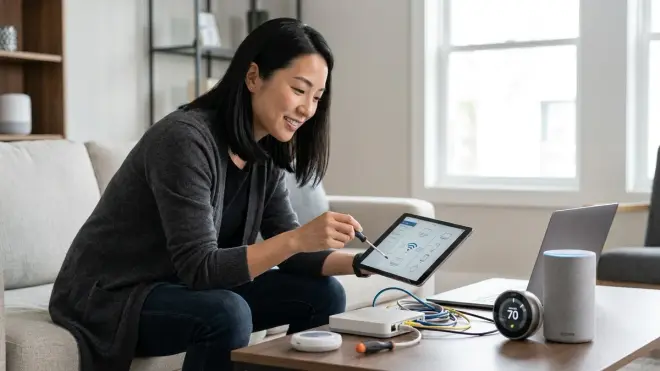
Z-Wave networks maintain a routing table that updates automatically as devices move or fail. When a node becomes unreachable, the controller marks it as failed after three consecutive missed check-ins (typically 3-9 minutes depending on configuration) and recalculates optimal paths through remaining devices. The network self-heals, but that 3-9 minute window represents a period of degraded responsiveness.
Zigbee behaves similarly but with faster recovery—typically 1-3 minutes—due to its more aggressive mesh maintenance protocols. However, Zigbee networks can experience "trapped node" scenarios where a device clings to a weak connection rather than switching to a stronger alternative, creating persistent latency.
Thread, designed with lessons from both predecessors, implements border router redundancy. If one border router fails, devices automatically switch to another within seconds. In practice, this makes Thread the most resilient protocol for critical automation paths—the foundation of a truly future-proof smart home architecture.
Matter standardizes how devices report their own health status and connection quality, making it easier for hubs to identify failing components before they disrupt automations. But Matter's fallback behaviors still depend on the underlying protocol (Thread, Wi-Fi, or bridged Zigbee/Z-Wave), making it more of a coordination layer than a replacement for protocol-level resilience.
Why Smart Home Automation Fallback Behaviors Matter
The difference between technology that enhances ambiance and technology that intrudes on consciousness often hinges on these invisible failure modes.
A thoughtfully designed fallback strategy creates predictable degradation. When the internet fails during a dinner party, you want assurance that lighting scenes remain adjustable via wall switches, that the thermostat continues its schedule, that motion-activated pathway lighting keeps functioning. The system shouldn't require intervention—it should simply operate with reduced intelligence, prioritizing core comfort over advanced optimization.
Safety-critical automations demand explicit fallback logic. I've consulted on projects where automated door locks were configured to "fail secure" (remain locked during power loss), trapping occupants inside during an electrical fire. The correct behavior—fail-safe unlocking with battery backup—requires deliberate configuration and testing. Similarly, environmental controls tied to elderly care or pet safety can't simply freeze in last state when sensors fail. They need to err toward conservative, safe defaults.
From a design perspective, visible indicators of failure destroy the "felt, not seen" philosophy. A smart bulb that enters pairing mode—flashing erratically—when it loses connection announces its technological nature at the worst possible moment. Bulbs that simply hold their last warm-white state disappear back into the architecture. This distinction separates products designed with restraint from those engineered without considering human space.
The reliability of your automation logic also determines maintenance burden. Systems without robust fallbacks require constant attention—you're troubleshooting why a routine stopped working, why a light is behaving unexpectedly, why yesterday's perfect automation is today's frustration. Resilient systems with well-defined fallback behaviors continue functioning quietly for months, surfacing issues only through gradual degradation rather than abrupt failure.
Types of Fallback Strategies and When to Use Each
Different failure modes call for different responses, and the most sophisticated systems implement multiple strategies layered throughout their logic.
State Retention (Conservative Approach)
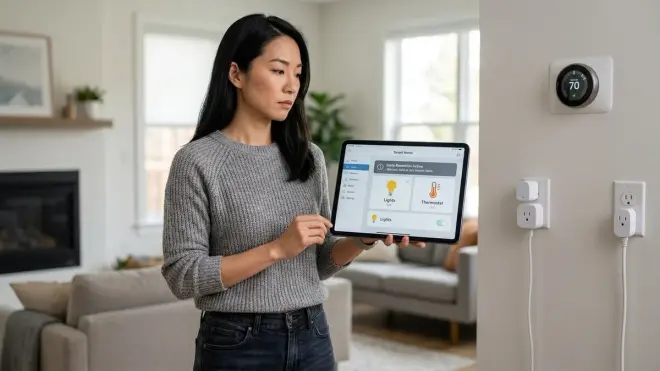
Best for: Lighting scenes, temperature settings, media volume levels
When connectivity drops, devices maintain their last known state indefinitely or until manually changed. A lamp set to 40% warm white stays at 40% warm white whether the hub is online or not. This creates the least disruption—occupants often won't notice a failure until they attempt a change that requires hub coordination.
Implementation: Most Zigbee and Thread devices default to this behavior. Explicitly configure it in your hub settings when available. Set timeout thresholds carefully—you don't want a "briefly dim lights during movie" automation to last three days because the sensor never detected movie-end.
Safe-Default Reversion (Cautious Approach)
Best for: Security devices, environmental controls, occupancy-dependent systems
When a condition can't be evaluated or a sensor fails, the system assumes the safest possible state. Door locks default to locked. HVAC systems revert to energy-saving mode rather than continuing to heat or cool aggressively. Motion-activated lights turn off after timeout rather than remaining on indefinitely.
Implementation:
if bedroom_occupied == true:
    set thermostat = 68°F
else if bedroom_occupied == false:
    set thermostat = 62°F
else if bedroom_occupied == null OR sensor_timeout:
    set thermostat = 65°F  // Safe middle ground
This introduces inefficiency—you're not optimizing energy in that moment—but prevents the system from making assumptions that could lead to discomfort or waste.
Scheduled Override (Time-Based Fallback)
Best for: Daily routine automations, circadian lighting
When sensor data becomes unavailable, the system falls back to time-based assumptions that align with typical patterns. Morning routines trigger based on time even if presence detection fails. Evening lighting adjusts on schedule rather than waiting for lux readings that may never arrive.
Implementation: Layer time conditions into every sensor-based routine:
if (hallway_motion == detected OR time == 6:30am):
    if outdoor_lux < 200 OR outdoor_lux == null OR time < 7:00am:
        set hallway_lights = 60%
This approach acknowledges that routines have temporal structure. Even when intelligence fails, rhythm continues.
Manual Override Preservation (User-Centric Approach)
Best for: Any automation that might conflict with explicit user intent
The most sophisticated fallback strategy recognizes when someone has manually adjusted a device and temporarily suspends automation until conditions reset. If you manually dim bedroom lights to 10% despite an automation wanting them at 40%, the system shouldn't fight you.
Implementation requires tracking device state changes that weren't initiated by automation logic. Most hubs support this through "last changed by" metadata, but you must explicitly program the respect:
if bedroom_lights.last_changed_by == "manual_override":
    skip_automation = true
    wait until bedroom_motion == none for 2 hours
    // Reset automation control after room unoccupied
This transforms automation from dictatorial to responsive—technology that serves rather than commands.
Notification Cascades (Transparent Failure)
Best for: Systems where immediate awareness of failure matters more than autonomous recovery
Rather than silently degrading, the system alerts occupants through progressively escalating channels: push notification, then text, then audible alert if critical. This suits scenarios where human judgment should override automated fallback logic.
Implementation: Define severity thresholds and corresponding notification methods. Reserve audible alerts for truly critical failures—water leak sensors offline, smoke detector mesh disrupted. Most failures warrant only a silent app notification reviewed when convenient.
Frequently Asked Questions
What happens to my smart home automations if the internet goes down?
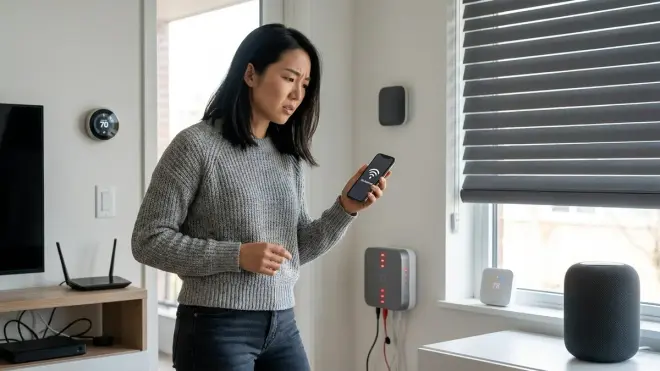
Your automations will continue functioning only if your hub processes logic locally and your devices communicate via mesh protocols like Zigbee, Z-Wave, or Thread. Hubs running Home Assistant, Hubitat, or Apple HomeKit with Thread devices maintain automation execution because the decision-making logic and device-to-device communication don't require internet. Cloud-dependent platforms like older SmartThings setups, basic Alexa routines, and Wi-Fi-only devices will stop responding to automation triggers—they may hold their last state, but no new routines execute until connectivity returns, typically leaving you with only manual control via physical switches or cached app interfaces if you're on the same local network.
How do I know if my smart home will fail gracefully or catastrophically?
Test it deliberately by disconnecting your internet for several hours during normal daily patterns. Observe which automations continue executing, which devices become unresponsive, and whether you can still control systems manually. Then disable your hub entirely—note which devices maintain their state and which revert to factory defaults. The best systems show minimal behavioral change during internet loss and controlled degradation during hub failure, with physical switches retaining full functionality. Catastrophic systems leave you unable to control basic functions like lighting or climate without cloud connectivity, revealing architectural dependencies you'll want to address through local processing hubs and mesh protocol devices before those failures occur during actual outages.
Can I configure custom fallback behaviors for specific automations?
Yes, through the automation logic you define in your hub—though the sophistication available varies dramatically by platform. Home Assistant and Hubitat allow extensive conditional fallback programming through their automation editors, letting you specify alternative actions when sensors time out, when conditions can't be evaluated, or when devices become unavailable. You can write if/else logic that says "if temperature sensor returns null, assume 70°F" or "if motion sensor offline, fall back to time-based lighting schedule." SmartThings with WebCore or Apple Home with advanced shortcuts offer moderate flexibility. Basic cloud platforms like standard Alexa routines provide minimal fallback customization—automations either work or they don't, with little middle ground. Building this logic requires understanding how your specific hub handles null values and timeout conditions, which determines whether you're creating true resilience or simply adding complexity that itself might fail unpredictably.
Which smart home protocols have the most reliable fallback behaviors?
Thread currently demonstrates the most resilient architecture, with border router redundancy enabling seamless failover when primary connections drop and recovery times typically under 3 seconds for mesh rerouting. Zigbee follows closely with 1-3 minute recovery windows and strong state retention across most devices, though it can suffer from trapped-node scenarios where devices cling to weak connections. Z-Wave offers comparable reliability to Zigbee but with slightly longer recovery periods of 3-9 minutes due to less aggressive mesh maintenance. Wi-Fi devices generally lack mesh intelligence entirely—they depend on router stability and cloud connectivity with no autonomous fallback mechanisms, making them the least reliable for critical automation paths. Matter improves standardization of how devices report their health status regardless of underlying protocol, but its fallback reliability ultimately inherits the characteristics of whichever transport it's using—Thread-based Matter performs best, Wi-Fi-based Matter worst.
How often do smart home automation failures actually occur in well-designed systems?
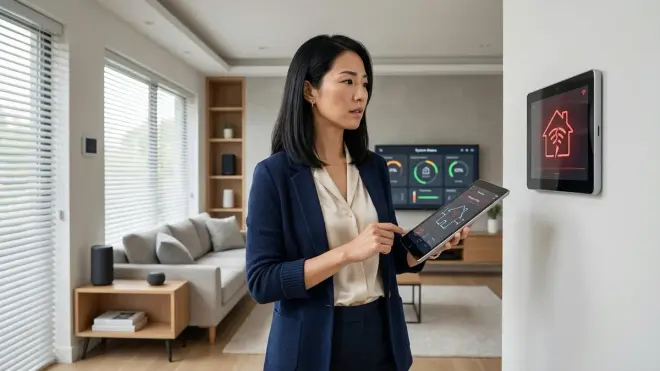
Well-architected systems built on local processing hubs with Zigbee or Thread mesh networks typically experience noticeable automation failures only during deliberate network maintenance or hardware replacement—perhaps 2-4 times per year for most households—with individual sensor battery depletion being the most common issue, occurring every 12-24 months per device depending on usage frequency and battery quality. Cloud-dependent systems show higher failure rates, with monthly or weekly minor disruptions during service updates, regional outages, or API changes from manufacturers. The often-overlooked failure mode is gradual degradation rather than sudden collapse—sensors begin reporting intermittently as batteries weaken, mesh paths become suboptimal as devices age, and logic that once triggered reliably starts showing 10-30 second delays that compound into noticeable disruption. This creeping degradation matters more than catastrophic failure because it happens slowly enough that occupants adapt their behavior around the dysfunction rather than fixing the underlying issue, defeating the purpose of automation that should feel effortless and creating the maintenance burden that turns early smart home enthusiasts into skeptics.
Summary
Smart home automation fallback behaviors transform fragile dependency into graceful degradation. The protocols you choose—Thread and Zigbee offering mesh resilience, Wi-Fi introducing single points of failure—establish the foundation. Your hub's local processing capability determines whether intelligence persists when cloud services falter. The defensive logic you write into automation routines governs how systems respond to incomplete sensor data and timeout conditions. Together, these layers create spaces where technology disappears into daily rhythm, surfacing only when it genuinely requires attention rather than announcing every minor disruption. The goal isn't perfect reliability—no electronic system achieves that—but rather predictable, dignified failure that maintains basic comfort and control even when the sophisticated optimization temporarily steps back. As platforms continue evolving and manufacturers push updates that can disrupt carefully tuned configurations, understanding these fallback mechanisms becomes essential to building automations that remain resilient across the inevitable changes ahead. The principles underlying platform-independent smart home automation emerge directly from this foundation—designing logic that survives not just device failures, but the ecosystem shifts that reshape smart home landscapes every few years.