

Thread will likely outlast Zigbee thanks to Matter adoption and industry backing, though Zigbee's decade-long installed base ensures relevance through at least 2030. This thread vs zigbee comparison explores longevity, ecosystem health, migration paths, and which protocol deserves your investment when invisibility and reliability matter more than early adoption hype.
I've watched clients agonize over protocol choices—not because they care about mesh topology, but because they're committing to invisible infrastructure that's expensive to replace. Conduit runs, in-wall sensors, concealed modules behind plaster—these aren't weekend projects. The wrong protocol choice means tearing into finished walls years later.
For anyone choosing between smart home protocols, the thread vs zigbee comparison boils down to one question: which investment won't require demolition in five years?
Quick Comparison
| Criterion | Thread | Zigbee |
|---|---|---|
| Matter Integration | Native application layer; full interoperability across platforms | Requires Matter bridge; limited native support |
| Hub Requirements | Most require hub (Apple TV 4K, Google Nest Hub 2nd gen, HomePod mini) | Dedicated hub or bridge required (Philips Hue Bridge, SmartThings, Hubitat) |
| Device Ecosystem (2026) | 800+ certified devices; rapid growth since 2024 | 5,000+ devices; mature but slowing expansion |
| Industry Backing | Apple, Google, Samsung, Amazon; embedded in flagship products | IKEA, Signify, Aqara; established but secondary protocol focus |
| Latency & Reliability | 30-50ms typical; IPv6-native routing with self-healing mesh | 20-40ms typical; proven mesh reliability over 15+ years |
| Longevity Outlook | Strong through 2035+; Matter's primary transport layer | Supported through 2030-2032; bridge-dependent thereafter |
Ecosystem Maturity and Device Availability
Zigbee entered homes in 2004. Thread shipped its first consumer products in 2021. That two-decade gap means something tangible when you're specifying what lives behind drywall.
Zigbee's catalog includes over 5,000 certified devices spanning every category from contact sensors the size of a coin to HVAC controllers managing whole-house systems. I've concealed Aqara door sensors in jamb recesses so shallow you can't see them even when the door's open. The Aqara Door and Window Sensor P2🛒 Amazon measures 28mm × 12mm—smaller than most Thread alternatives, which matters enormously when discretion determines whether a client accepts automation at all. The Zigbee ecosystem matured through iteration; manufacturers learned to shrink components, extend battery life to 3-5 years, and build casings that disappear into white trim.
Thread's 800+ certified devices represent explosive growth, but gaps remain. Multi-gang in-wall dimmers that fit European-style back boxes? Limited options. Motorized roller shade controllers slim enough for 50mm pockets? Rare. Battery-powered sensors matching Zigbee's five-year endurance? Still emerging. For projects demanding specific form factors—especially retrofits where enclosure dimensions are fixed—Zigbee often provides the only invisible solution.
But catalog size misleads if half those devices become orphaned. Zigbee's growth has plateaued; major manufacturers now prioritize Thread development. Eve Systems dropped Zigbee entirely in 2023. Nanoleaf shifted focus. Even Philips, Zigbee's most visible champion, added Thread radios to flagship products in 2025. The energy is elsewhere.
Thread devices work natively with Matter, the application layer backed by every major platform. That means an Eve MotionBlinds controller configured through Apple Home works identically in Google Home without re-pairing or bridges. Automation logic—IF hallway_motion_thread = true THEN hallway_lights_thread = on (fade: 2s)—executes regardless of which voice assistant the household prefers. Clients change phones, swap tablets, migrate from Alexa to Google. Thread devices follow without reinstallation.
Zigbee requires bridges to reach Matter. The Philips Hue Bridge translates Zigbee bulbs into Matter-compatible endpoints, but that translation layer introduces failure points. Bridge firmware lags. Updates occasionally break integrations. I've seen Hue Bridges lose connection to Apple Home after iOS updates, requiring factory resets that wipe scenes—catastrophic when those scenes control color temperatures tuned to specific artwork.
Hub Infrastructure and Single Points of Failure
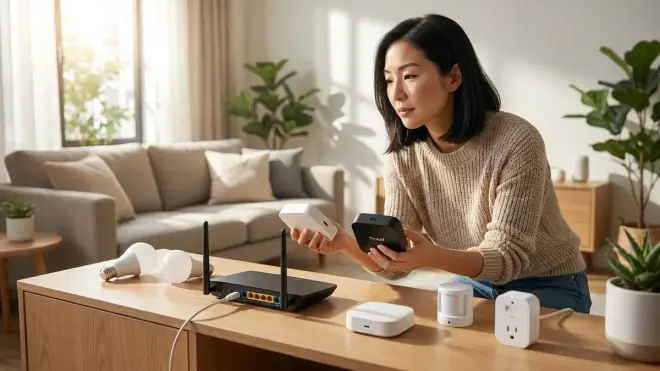
Neither protocol operates hub-free, despite marketing suggesting otherwise. Understanding what fails—and how—shapes longevity expectations.
Zigbee hubs range from single-purpose bridges to comprehensive controllers. The Philips Hue Bridge🛒 Amazon handles 50 Zigbee devices exclusively. SmartThings and Hubitat manage Zigbee, Z-Wave, and cloud integrations, becoming the central nervous system for entire homes. That centralization creates vulnerability. When a SmartThings hub dies, every routine halts. Morning lighting sequences stop. Automated window treatments freeze. Clients wake to homes that no longer respond.
I specify redundant hubs for critical routines—separate Hue Bridges for lighting zones, so a bridge failure darkens one room instead of twelve—but that multiplies cost and complexity. Each hub requires power, network connectivity, and configuration backup. For the invisible aesthetic I prioritize, equipment closets bloat with devices.
Thread's hub requirements prove both simpler and more constrained. Any Thread Border Router—Apple TV 4K, Google Nest Hub (2nd gen), HomePod mini, Amazon Echo (4th gen)—connects Thread devices to the home network. Most households already own qualifying devices. Multiple border routers automatically share the load; if one fails, another assumes responsibility within seconds. The mesh self-heals without user intervention.
But here's the friction: Thread ties you to platform ecosystems more tightly than Zigbee. Apple Home requires at least one Apple device as a border router. Google Home needs a Google device. While Matter promises cross-platform operation, border router management remains siloed. A household fully committed to Google can't easily pivot to Apple without acquiring new hub hardware.
Zigbee's platform-agnostic hubs—particularly Hubitat and Home Assistant Yellow—let you switch voice assistants, cloud platforms, even manufacturers, without replacing infrastructure. That flexibility extends device lifespan through platform transitions.
Latency differences are negligible for human-perceived interactions. Zigbee typically delivers 20-40ms command-to-execution times. Thread averages 30-50ms. Neither lag registers when you tap a switch. Both protocols support local execution, meaning automations continue during internet outages—critical for automation fallback behaviors when you're designing systems meant to fade into daily rhythms.
Reliability distinctions emerge in mesh density. Zigbee requires mains-powered devices (bulbs, plugs, switches) as repeaters; battery devices don't extend the mesh. Thread allows certain battery devices to act as routers, creating denser networks in spaces dominated by sensors. A hallway with six Thread motion sensors strengthens the mesh. Six Zigbee sensors create dead-end connections.
Interoperability and Cross-Platform Operation
The thread vs zigbee comparison crystallizes around Matter, the interoperability standard promising to end platform lock-in. Except it doesn't—not equally, not yet.
Thread functions as Matter's preferred transport layer. The Matter protocol and its future-proofing implications hinge on Thread's IP-based architecture. Every Thread device carries IPv6 addressing, allowing direct communication with phones, tablets, and cloud services without protocol translation. When you commission a Thread device in Apple Home, it becomes immediately available in Google Home, Samsung SmartThings, and Amazon Alexa if those platforms share the same Matter fabric.
Zigbee reaches Matter only through bridges. Your Hue bulbs appear in multiple apps, but they're Zigbee endpoints translated through a bridge into Matter-compatible representations. That works—until bridge manufacturers decide legacy products don't warrant Matter updates. Ikea's Trådfri Bridge received Matter support in late 2024. Older Zigbee devices from defunct manufacturers may never get bridged.
Here's what breaks invisibility: bridges require configuration. Each platform must authenticate with the bridge. Firmware updates occasionally reset those connections. I've had clients text photos of error messages after updates, frustrated that their "invisible" lighting no longer responds. They didn't sign up to become IT administrators.
Thread's native Matter integration eliminates that layer. Commission once, control everywhere. But interoperability limitations persist. Not every Thread device exposes identical features across platforms. An Eve Door & Window sensor shows battery level in Apple Home but not Google Home. A Nanoleaf Essentials bulb supports Thread in HomeKit but reverts to Bluetooth in Alexa. The promise of seamless operation collides with implementation realities.
Zigbee's cross-platform story relies on hub choice rather than device protocol. A Hubitat hub running local automations doesn't care which voice assistant you prefer; it exposes devices to all platforms simultaneously. You're not locked into Apple's ecosystem or Google's vision. For households that value independence from Big Tech, that separation matters.
Migration paths differ sharply. Transitioning from Zigbee to Thread requires replacing every device. They're incompatible radio standards. That means pulling sensors from door jambs, swapping in-wall switches, updating shade controllers—demolition work antithetical to invisible integration. If you've embedded Zigbee infrastructure into architectural millwork, you're committed for the life of that installation.
Conversely, adding Thread to a Zigbee system requires only a border router, then gradual device replacement as failures occur. Thread's forward compatibility through Matter preserves investment as you migrate. Zigbee devices bridged to Matter coexist with native Thread devices. The transition can span years, matching natural replacement cycles.
Industry Investment and Long-Term Support
Protocol longevity follows corporate commitment. Where are Apple, Google, and Samsung—the trillion-dollar platforms shaping smart home direction—investing engineering resources?
Thread receives flagship integration. Apple embedded Thread radios in HomePod mini (2020), Apple TV 4K (2021), and iPhone 15 Pro (2023). Google added Thread to Nest Hub Max (2nd gen) and Nest Wifi Pro. Samsung's SmartThings Station ships with Thread and Matter out-of-box. These aren't experimental features; they're table stakes for platform strategy in 2026.
Zigbee increasingly lives in budget and legacy lines. No flagship phone or tablet has added Zigbee radios since 2019. Platform development focuses on bridging existing Zigbee devices, not expanding the protocol. Amazon still sells Echo devices with Zigbee radios, but Thread models outsell them three-to-one according to market data from mid-2025.
This distinction matters for future-proof smart home infrastructure because support horizons follow revenue. Companies maintain protocols that ship in high-margin products. Thread resides in $179 HomePods and $499 phones. Zigbee lives in $29 bridges and white-label sensors. Which protocol gets priority when engineers allocate time?
Zigbee's installed base—over 500 million devices globally—ensures support through 2030 minimum. Too many customers depend on Hue ecosystems, IKEA Trådfri networks, and SmartThings hubs for platforms to abandon overnight. But "support" means security patches and bridge updates, not innovation. New device categories will debut on Thread, not Zigbee.
Matter's evolution favors Thread explicitly. Matter 1.4 (released March 2024) introduced enhanced multi-admin features that leverage Thread's IP architecture; Zigbee devices access these features only partially through bridges. Future Matter versions will deepen that gap. Thread devices receive feature updates via firmware. Bridged Zigbee devices wait for bridge manufacturers to implement translations—a lag measured in months or years.
The clearest signal: manufacturers discontinuing Zigbee product lines. Eve Systems, once a Zigbee advocate, now ships Thread exclusively. Nanoleaf phased out Zigbee in 2024. Aqara, a Zigbee stalwart, launched 14 Thread devices in 2025 versus four new Zigbee products. Industry momentum has shifted.
Practical Considerations for Invisible Integration
My clients rarely ask about protocols. They ask whether they'll notice the technology. Can sensors hide in crown molding? Will switches match existing Decora plates? Does battery life mean accessing concealed compartments annually or every five years?
Zigbee's maturity delivers form factor options Thread hasn't matched. Ultra-slim contact sensors that fit 8mm jamb gaps. Pico-style switches requiring no neutral wire, ideal for retrofit boxes. Motion sensors shaped to nestle behind ceiling vents. Thread will catch up—it's following Zigbee's playbook—but as of 2026, achieving true invisibility often demands Zigbee components.
Battery life weighs heavily when devices hide behind furniture or inside cabinetry. Zigbee sensors typically achieve 3-5 year battery life on CR2032 or AAA cells, thanks to efficient sleep modes refined over decades. Thread devices range from 18 months to 4 years depending on reporting frequency and manufacturer optimization. That difference determines whether clients access a concealed sensor twice a decade or five times.
Thread's IP-native architecture enables features Zigbee can't match, though clients rarely notice. Direct device-to-device communication without hub mediation reduces latency for local automations. IPv6 addressing simplifies troubleshooting; every Thread device has a discrete network identity rather than Zigbee's cluster-based addressing. For integrators, that's meaningful. For residents, it's invisible.
Installation complexity favors Thread slightly. Pairing happens through Matter's QR code system, consistent across devices and platforms. Zigbee pairing varies by hub—some use proximity, others require button sequences, a few demand Zigbee channel scanning. Matter standardization eliminates that learning curve.
The critical invisible advantage: Thread devices remain responsive during internet outages because they're locally addressable via IP. A simple automation—IF bedroom_door_thread = closed AND time > 22:00 THEN bedroom_lights_thread = off (delay: 60s)—executes on the border router without cloud dependency. Zigbee automations also run locally on capable hubs (SmartThings, Hubitat), but cloud-dependent hubs (Hue Bridge) lose automation capabilities when internet drops. For the seamless operation I design around, that distinction shapes hub specification.
Who Should Choose Thread
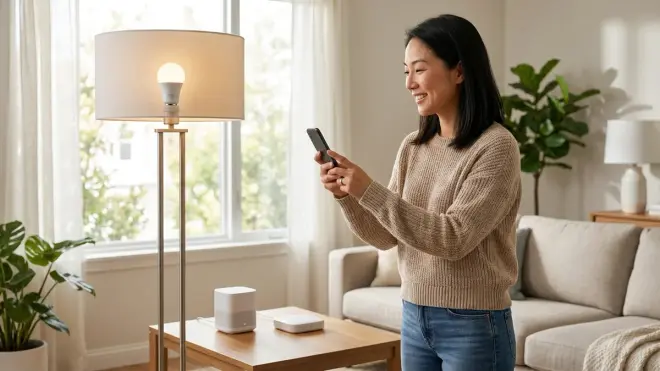
Choose Thread if you're building from scratch, prioritize platform flexibility, or expect to upgrade devices over the next decade. Thread's Matter integration provides genuine cross-platform operation—not marketing promises, but functional device control across Apple, Google, Samsung, and Amazon ecosystems today.
The protocol makes sense for households already invested in Apple, Google, or Samsung platforms with existing Thread border routers. You're adding functionality to infrastructure you already own. Incremental cost is low.
Thread suits clients who value simplicity over catalog depth. Fewer device options mean less decision paralysis. The ecosystem guides you toward proven products rather than overwhelming choice. For minimalist installations where you're specifying three device types—contact sensors, dimmers, motion detectors—Thread's catalog suffices.
It's the right choice for anyone planning gradual expansion. Add devices over years, confident they'll interoperate as Matter matures. The protocol's youth means improvement trajectories are steep; Thread devices in 2028 will outperform 2026 models significantly. Zigbee has already plateaued.
Who Should Choose Zigbee
Choose Zigbee for retrofit projects, specialized form factors, or when divorcing smart home infrastructure from platform ecosystems matters. Zigbee's device catalog includes niche solutions Thread hasn't replicated: nano-switches fitting behind existing rockers, motorized shade controllers for 45mm tubes, ceiling fan modules with independent light/fan control.
The protocol excels for installations demanding absolute platform independence. Pair with Hubitat or Home Assistant, and you're insulated from Apple's, Google's, or Amazon's strategic shifts. Voice assistants become optional interfaces rather than required infrastructure. For clients wary of Big Tech surveillance or planned obsolescence, that separation provides genuine autonomy.
Zigbee makes sense when battery life trumps other factors. The most power-efficient sensors remain Zigbee; some models achieve seven years on a single battery. For sensors concealed in architectural details—behind trim, inside millwork, above ceiling tiles—minimizing access frequency preserves invisibility.
It's practical for expanding existing Zigbee ecosystems. If you've already invested in Hue lighting, IKEA furniture with integrated controls, or SmartThings hubs, adding Zigbee devices avoids protocol fragmentation. Mixing Thread and Zigbee works, but managing two mesh networks complicates troubleshooting.
Finally, Zigbee suits budget-conscious installations. Devices cost 20-40% less than Thread equivalents as of 2026. For covering large spaces with motion sensors or equipping rental properties, that difference compounds quickly.
Frequently Asked Questions
Will Zigbee devices stop working when manufacturers shift to Thread?
Zigbee devices will continue functioning as long as their hubs receive support—likely through at least 2030 for major platforms like Philips Hue and SmartThings. The devices themselves contain no expiration date; they'll operate indefinitely with compatible hubs. However, manufacturers are slowing Zigbee development, meaning newer features, tighter Matter integration, and expanded device categories will appear on Thread first. Existing Zigbee installations remain viable, but expansion paths narrow over time. Bridges can extend Zigbee device lifespan by providing Matter connectivity, assuming bridge manufacturers continue firmware updates.
Can I mix Thread and Zigbee devices in the same smart home system?
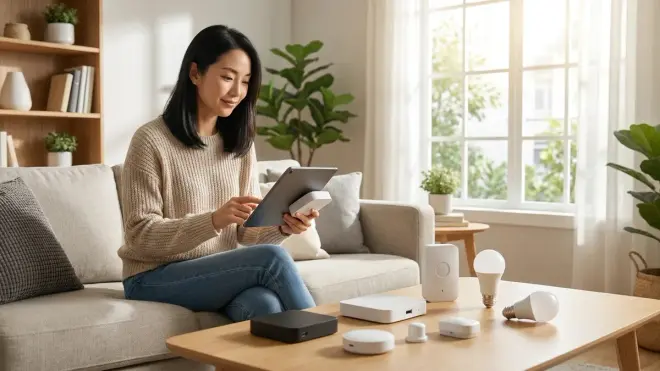
Yes, mixing protocols is common in 2026, though it requires hubs supporting both standards—multi-protocol hubs like SmartThings or Hubitat manage Zigbee, Thread, Z-Wave, and Wi-Fi devices simultaneously. Thread and Zigbee operate on separate mesh networks using the same 2.4GHz spectrum but different communication standards, so they don't interfere. The complexity emerges in automation logic: you'll create routines that bridge protocols, sometimes introducing latency when a Zigbee motion sensor triggers a Thread bulb through a hub intermediary. For critical automations, keeping trigger and action devices on the same protocol ensures lowest latency and highest reliability.
Does Thread's battery life improve enough to match Zigbee's efficiency?
Thread battery life has improved significantly from early implementations but still trails Zigbee's most efficient sensors as of 2026. Thread devices now achieve 2-4 years on standard batteries compared to Zigbee's 3-7 year range, depending on reporting frequency and manufacturer optimization. The gap narrows as Thread chipsets mature; models released in late 2025 show 40-60% longer battery life than 2023 equivalents. IPv6 overhead costs power, but Thread's routing efficiency partially offsets that penalty. For most installations, both protocols provide multi-year battery life sufficient to avoid frequent maintenance—the difference matters primarily for concealed sensors requiring ladder access or furniture disassembly to reach.
Bottom Line
The thread vs zigbee comparison reveals no universal winner, only better fits for specific contexts. Thread's Matter integration and industry momentum position it as the long-term protocol for new installations, especially for households already embedded in Apple, Google, or Samsung ecosystems. Its IP-native architecture aligns with where smart home platforms are heading, not where they've been.
Zigbee persists as the practical choice for retrofits, specialized applications, and platform-independent control. Its mature ecosystem and device diversity solve problems Thread's catalog can't address yet. For invisible integration demanding specific form factors or maximum battery life, Zigbee often remains the only viable option.
Neither protocol faces imminent obsolescence. Zigbee's installed base guarantees support well into the 2030s, even as development slows. Thread's growth trajectory suggests dominance by decade's end, but that future hasn't arrived. The smartest approach—choosing devices based on immediate functional needs rather than protocol allegiance—requires understanding interoperability requirements before committing to infrastructure you'll live with for years.
For homes where technology should be felt rather than seen, protocol choice matters less than device selection, installation craft, and automation logic that responds to rhythms instead of demanding attention. The best protocol is the one you forget exists.