
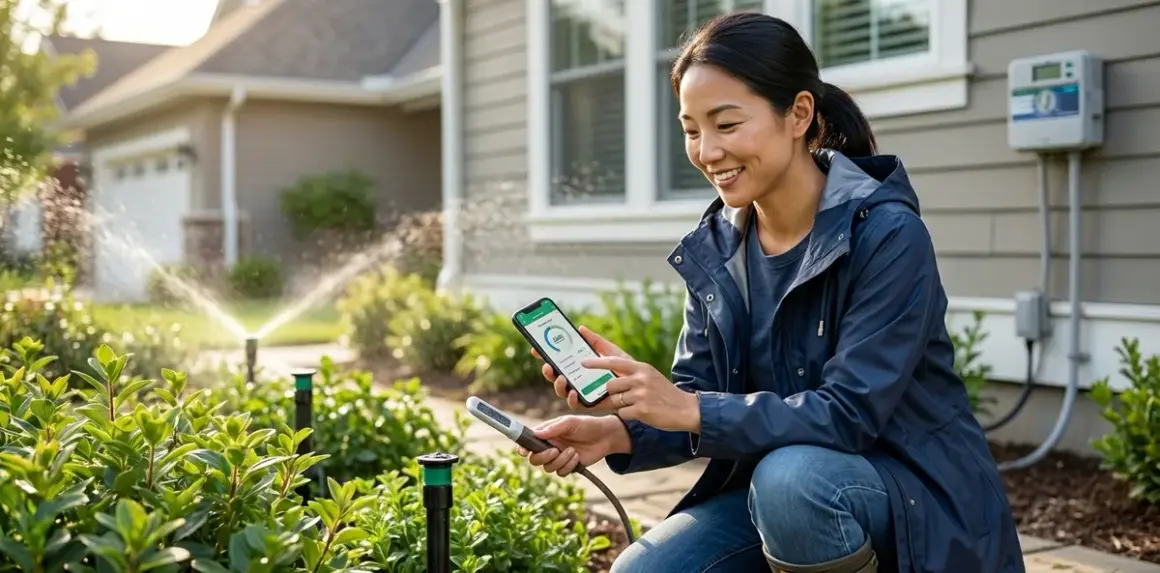

When a client gestures toward their lawn and asks, "Can we make this invisible too?" they're often surprised to learn that understanding smart irrigation zones scheduling is one of the quietest, most sophisticated expressions of home automation. No visible panels. No screens mounted to exterior walls. Just grass that stays precisely as lush as intended, fed by logic buried in soil and cloud servers, responsive to weather patterns before they arrive. The garden waters itself while you sleep, adjusting for last night's rain and tomorrow's forecast—felt in the landscape, never seen in the infrastructure.
What Are Smart Irrigation Zones and Scheduling Logic?
Smart irrigation zones represent discrete sections of your landscape, each controlled independently based on specific plant needs, sun exposure, soil type, and microclimates within your property. Scheduling logic is the conditional automation layer that determines when, how long, and whether each zone receives water—processing inputs from soil moisture sensors, local weather APIs, seasonal calendar rules, and manual overrides.
Unlike traditional timer-based sprinkler systems that water on fixed schedules regardless of conditions, smart irrigation systems operate through if/then decision trees. These systems use Wi-Fi controllers (most common, requiring stable network connectivity and cloud service access) or Zigbee/Z-Wave controllers (rarer, requiring compatible hubs but offering local execution and better resilience during internet outages). Thread and Matter protocols have minimal presence in irrigation as of 2026, though Matter 1.4 specifications include water management device types that may expand compatibility in future releases.
The system continuously evaluates conditions: if soil moisture in zone 3 drops below 35% and no rain is forecast in the next 12 hours and current temperature is above 55°F, then activate zone 3 for 18 minutes at 6:00 AM. The intelligence layer replaces the homeowner's daily guesswork with sensor-informed decisions, typically managed through manufacturer apps (Rachio, Orbit B-hyve, Hunter Hydrawise) or integrated into broader smart home platforms like Home Assistant or Apple HomeKit.
This becomes part of the home's invisible nervous system—one more automation felt in the quality of outdoor spaces rather than observed in gadget clutter.
How Smart Irrigation Zones and Scheduling Logic Work
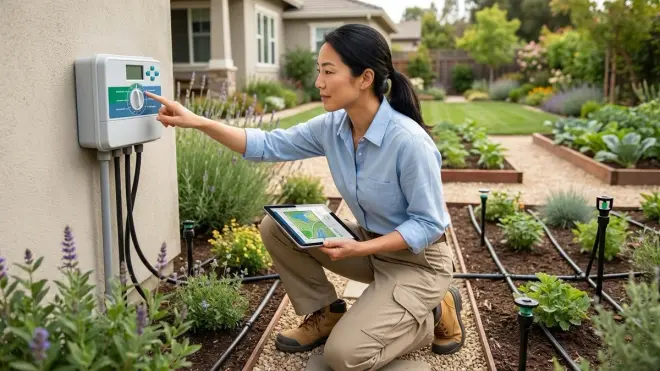
The zone architecture begins with the physical valve manifold, typically buried in a utility area or valve box near your water main. Each solenoid-controlled valve corresponds to one irrigation zone. The smart controller replaces the mechanical timer in traditional systems, sending 24V signals to open or close specific valves based on programmed logic.
Protocol considerations matter significantly for reliability. Wi-Fi controllers (like the Rachio 3 Smart Sprinkler Controller) dominate the market and integrate easily with voice assistants and major ecosystems, but they introduce critical dependencies: stable wireless coverage to the outdoor controller location, persistent internet connectivity for cloud-based decision-making, and manufacturer server uptime. If your router fails or internet drops during a scheduled cycle, most Wi-Fi controllers default to "continue current operation" until connection restores—meaning a zone that started watering will complete its programmed duration even if conditions change. This fallback behavior varies by manufacturer, and it's worth testing before trusting the system during vacation absences.
Zigbee and Z-Wave irrigation controllers are rare but offer advantages for design-conscious installations: they can execute schedules locally through a concealed hub, continue functioning during internet outages, and don't broadcast Wi-Fi signals that might require additional access points. The tradeoff is limited product selection and more complex initial configuration.
The scheduling logic layer processes multiple input streams:
IF (soil_moisture_zone_2 < threshold_35_percent)
  AND (precipitation_forecast_24hr == 0_inches)
  AND (current_temp > 55F)
  AND (current_time >= sunrise + 30_minutes)
  AND (manual_override != active)
THEN
  activate_zone_2
  duration = base_time * evapotranspiration_multiplier * slope_adjustment
  wait_for_completion
  log_water_usage
ELSE
  skip_cycle
  reschedule_evaluation_6hr
Evapotranspiration (ET) modeling—the rate at which water evaporates from soil and transpires through plants—adjusts run times based on temperature, humidity, wind speed, and solar radiation. Advanced controllers pull this data from local weather stations via API or calculate it using NOAA-sourced regional climate data. A zone programmed for 20 minutes on a cool, overcast morning might automatically extend to 26 minutes on a hot, windy afternoon.
Sensor integration refines the logic further. Wired or wireless soil moisture sensors installed in representative locations within each zone provide ground-truth feedback. These sensors typically use Wi-Fi direct communication (Orbit B-hyve), Zigbee mesh (rare, requiring hub proximity), or proprietary RF protocols (Hunter, requiring dedicated receiver modules). The controller compares sensor readings against threshold values you set during configuration—watering triggers only when actual soil conditions demand it, overriding even the calculated ET schedule.
Latency between sensor reading and valve activation ranges from 2-8 seconds for local Zigbee systems to 10-45 seconds for cloud-dependent Wi-Fi systems, depending on server response time and network congestion. This delay rarely matters for irrigation—unlike motion-activated lighting where 10-second lag destroys the experience—but it's one more reason I prefer local execution where possible.
Rain sensors and freeze sensors add additional conditional layers: if rainfall detected or temperature below 37°F, then suspend all schedules for 48 hours. These simple binary inputs prevent wasteful watering after storms and protect pipes from freeze damage.
Why Understanding Smart Irrigation Zones Scheduling Matters
For landscape design integrated with architecture, the automation should be as invisible as the drainage system. Clients rarely want to think about irrigation—they want healthy gardens without the cognitive load of remembering to water or the aesthetic intrusion of outdoor control panels. Understanding smart irrigation zones scheduling allows you to specify systems that genuinely disappear: controllers mounted inside garage utility closets, wireless sensors flush with garden beds, valves buried in minimalist enclosures rather than exposed PVC risers.
Water conservation becomes automatic rather than aspirational. Traditional fixed-schedule systems overwater by an estimated 30-50% compared to actual plant needs, according to the EPA WaterSense program. Smart scheduling reduces usage by adjusting for real-time conditions—skipping unnecessary cycles, shortening run times during humid periods, concentrating water where sensors indicate need. In Pacific Northwest projects where summer drought restrictions limit watering windows, intelligent scheduling ensures compliance while maintaining landscape health.
Integration with broader smart home energy management allows sophisticated multi-system coordination. For homes with time-of-use utility rates or solar production, irrigation can shift to off-peak hours or sunny afternoons when excess solar capacity would otherwise export to the grid. An automation might delay morning watering if the home's total electrical load is already high from HVAC and morning routines.
More subtly, understanding the conditional logic helps you set realistic expectations with clients. A smart irrigation system isn't clairvoyant—it depends on accurate weather API data (which can be wrong for microclimates), properly calibrated sensors (which drift over seasons), and functioning network infrastructure. I've seen beautifully designed gardens suffer because the controller lost Wi-Fi connectivity during a heat wave and the homeowner assumed everything was still operating. Building in manual override switches and visual indicators (subtle LEDs inside utility areas, not on exterior walls) creates fallback options when automation fails.
Types and Approaches to Zone Configuration
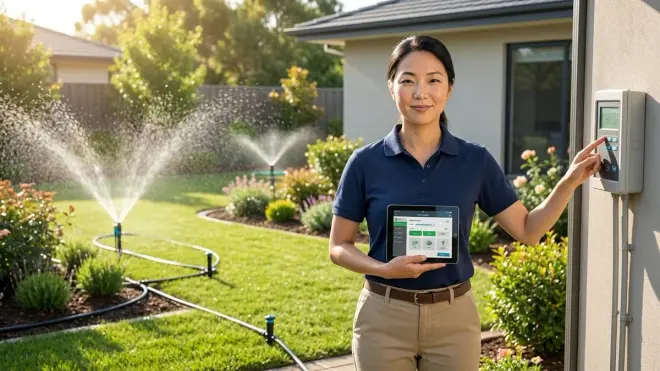
Physical zone division typically follows one of three strategies:
Hydrozoning groups plants with similar water requirements into shared zones. Drought-tolerant natives occupy one zone with infrequent deep watering; thirsty annuals and vegetable beds occupy another with daily shallow watering. This approach maximizes water efficiency but requires thoughtful landscape design from the beginning—retrofitting existing gardens into hydrozone logic often reveals plantings that work against smart scheduling.
Microclimate-based zoning divides areas by sun exposure, wind patterns, slope, and soil type rather than plant type. South-facing slopes with fast-draining soil become separate zones from shaded northern exposures with clay retention. This matches the physical reality of how water behaves across your property, allowing scheduling logic to compensate for environmental differences.
Functional zoning separates by use: lawn zones, garden bed zones, potted container zones (increasingly controlled by separate drip systems), and foundation plantings. This aligns with maintenance patterns—lawns often need frequent shallow watering while established shrubs need infrequent deep soaking.
Drip irrigation versus spray zones require different scheduling approaches. Drip emitters deliver water slowly at low pressure directly to root zones, typically running 45-90 minutes per cycle. Spray heads deliver high-volume water quickly, usually 8-15 minutes per cycle. The controller must differentiate these zone types when calculating schedules—using the wrong settings leads to either flooded spray zones or inadequately watered drip zones.
Stacked zones—multiple valve-controlled areas sharing the same physical space but serving different plant layers (turf, shrubs, trees)—allow ultra-precise watering but require careful pressure management and more complex scheduling logic. I've used this approach in high-end projects where specimen trees have dedicated zones independent of the surrounding lawn.
Frequently Asked Questions
What protocols do smart irrigation controllers use and do they need hubs?
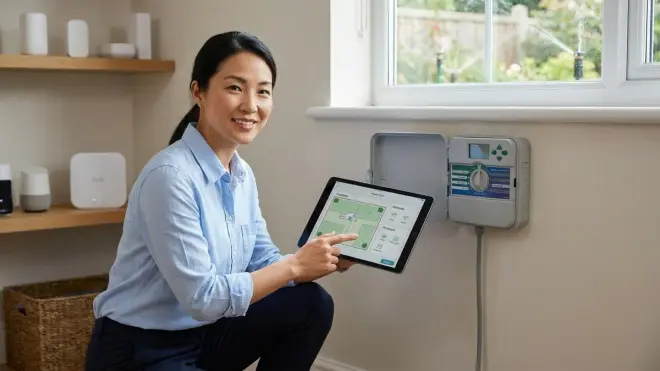
Most smart irrigation controllers in 2026 use Wi-Fi direct to connect to your home network and communicate with cloud servers for weather data and remote app control. These systems don't require separate hubs but depend entirely on stable internet connectivity and manufacturer server uptime. If your router fails or the manufacturer discontinues cloud service, the controller typically reverts to basic timer functionality using the last-saved schedule. A handful of controllers support Zigbee or Z-Wave protocols and require compatible hubs (SmartThings, Hubitat, Home Assistant with appropriate radios), but these offer local execution and continue functioning during internet outages—more resilient infrastructure though harder to find and configure. Thread and Matter support for irrigation controllers remains minimal as of 2026, though Matter 1.4 specifications include water management device categories that may expand options. For invisible installations, consider protocol compatibility requirements when selecting controllers and whether you can conceal the necessary hub hardware.
How often do smart irrigation schedules adjust and what triggers changes?
Schedule adjustments happen continuously in the decision-making layer but manifest as discrete watering events—typically daily evaluations that either execute, skip, shorten, or extend watering based on current conditions. The system checks weather forecasts, sensor readings, and ET calculations before each scheduled cycle, then applies the conditional logic: if soil moisture is adequate or rain is forecast, it skips the cycle entirely; if temperatures are unusually high, it extends run time by the calculated multiplier. Some controllers poll weather APIs every 15-60 minutes and can cancel in-progress cycles if unexpected rain begins. Soil moisture sensors report at intervals from 10 minutes (battery-intensive) to 2 hours (more typical), with the controller using the most recent reading in its decision tree. Understanding this rhythm matters when testing device response times—you won't see instant adjustments to changing conditions but rather intelligent decisions at the next evaluation window.
Can smart irrigation work without internet or cloud services?
Partially, depending on the controller. Wi-Fi-dependent systems like Rachio or Orbit B-hyve require internet connectivity for weather-based adjustments, remote app control, and advanced scheduling features—without internet, they typically continue executing the last-programmed fixed schedule as a basic timer but lose all "smart" functionality. Zigbee and Z-Wave controllers running through local hubs like Home Assistant can execute complex conditional logic entirely offline if you've configured local weather station integrations and sensor automations—no cloud dependency, no service discontinuation risk. For vacation properties or areas with unreliable internet, this local execution matters significantly. You can also design fallback behaviors: a simple rain sensor and freeze sensor wired directly to valve common terminals will suspend all watering regardless of controller state, providing basic protection even if the smart system fails. For truly invisible, resilient automation, local execution is worth the extra configuration complexity.
What happens if soil moisture sensors fail or give inaccurate readings?
The system will make poor decisions because it's trusting false data—overwatering if a sensor falsely reports dry conditions, or underwatering if it falsely reports saturation. Soil moisture sensors drift over time due to mineral buildup on electrode surfaces, physical soil settling, or battery depletion in wireless models. Most controllers don't automatically detect sensor failure; they simply incorporate whatever reading arrives. To address this, schedule quarterly sensor validation: manually check soil moisture with a probe in multiple locations within the zone, compare against the sensor reading, and recalibrate or replace sensors showing more than 10% variance. Some controllers allow you to set sensor reading bounds—if a sensor reports outside physically possible ranges (below 0% or above 100%), the controller flags it as suspect and falls back to weather-based scheduling for that zone. For design projects where sensors will be inaccessible after installation (under decking, beneath established plantings), I specify wired sensors over wireless to eliminate battery concerns and recommend controller models with sensor health monitoring that can alert to connection loss.
How do smart irrigation systems integrate with other smart home automations?
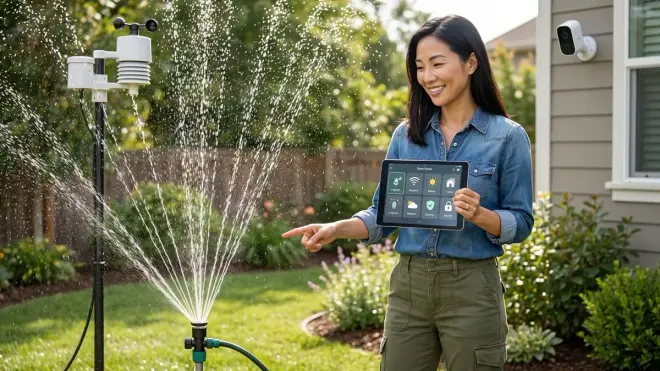
Integration quality varies dramatically by protocol and platform. Wi-Fi controllers typically integrate with voice assistants (Alexa, Google Home) for basic commands ("Alexa, water zone 2") and can trigger IFTTT applets or simple automations in manufacturer ecosystems—useful for linking "vacation mode" across multiple systems. Deeper integration happens through platforms like Home Assistant, SmartThings, or Apple HomeKit (limited controller support): you can create conditional logic that coordinates irrigation with other systems, such as if whole-home power consumption exceeds threshold and time-of-use rate is peak, then delay all irrigation cycles until off-peak hours. Or if outdoor security camera detects activity in backyard and current time is within scheduled watering window, then pause irrigation for 20 minutes to avoid soaking whoever is outside. I've designed automations that link irrigation water usage (measured via smart energy monitors) to whole-home energy dashboards, making landscape water consumption visible alongside HVAC and appliance loads. The key is choosing controllers that expose individual zone controls and status as discrete entities in your platform—many Wi-Fi systems only offer "run/stop all zones" rather than granular per-zone control, limiting automation sophistication.
Summary
Understanding smart irrigation zones scheduling transforms routine garden maintenance into ambient intelligence—watering that adapts to weather, responds to soil conditions, and coordinates with broader home systems without ever demanding attention. The technology layers conditional logic over physical valve infrastructure, typically using Wi-Fi controllers that depend on cloud connectivity or less common Zigbee/Z-Wave systems that execute locally through hubs. Effective zone design matches irrigation patterns to plant needs, microclimates, and functional areas, while scheduling logic processes sensor data, weather forecasts, and ET calculations to determine optimal watering timing and duration. For design-conscious installations, the entire system can be buried and concealed—controllers in utility closets, sensors flush with plantings, valve boxes disguised in landscape features—leaving only healthy gardens as evidence of the automation working quietly beneath the surface. The best irrigation systems are the ones you never think about because they simply keep the landscape precisely as intended, season after season, adjusting invisibly as conditions change.