
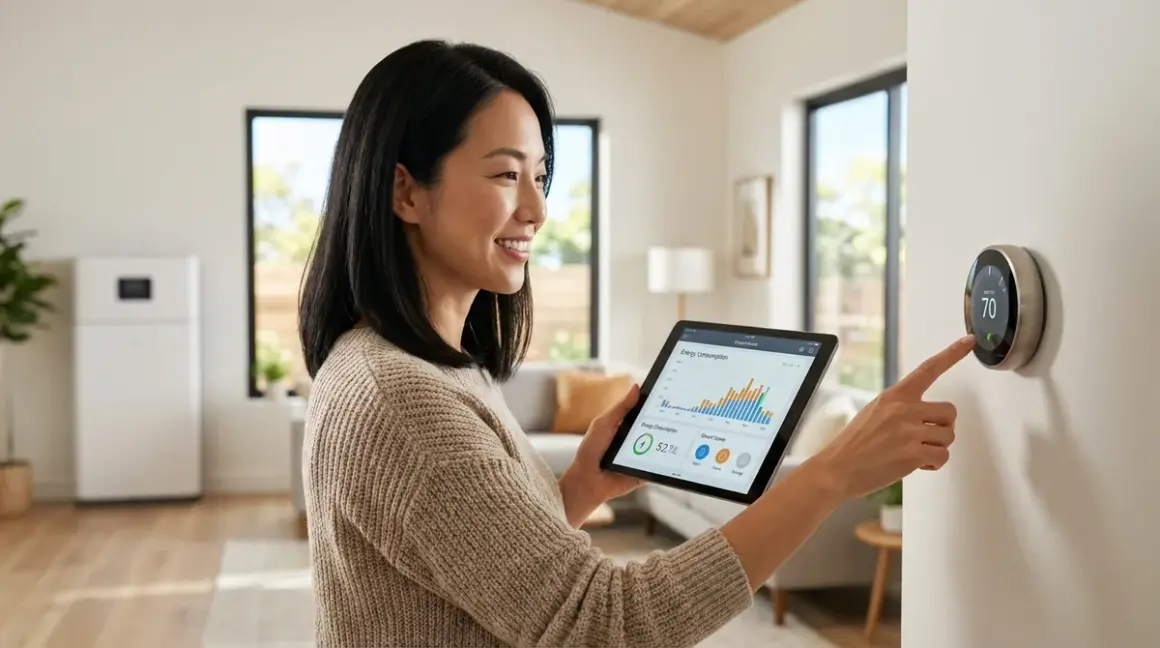

Time-of-use electricity rates reward those who shift consumption away from expensive peak hours—and peak off peak energy automation smart home systems handle that choreography invisibly. Rather than manually toggling appliances or adjusting schedules, automation layers learn your utility's rate structure and orchestrate device behavior behind the scenes, reducing energy costs without disrupting the rhythm of your home. The result feels effortless: lighting that warms rooms when power is affordable, climate systems that pre-cool spaces before rates climb, water heaters that silently recharge overnight.
What Is Peak and Off-Peak Energy Automation?
Peak off peak energy automation smart home refers to programmable logic and sensing systems that shift electricity consumption based on time-of-use (TOU) rate structures. Utilities charge more during periods of high grid demand—typically mid-afternoon through early evening—and less during low-demand windows like overnight or mid-morning. Automation interprets these rate schedules and controls compatible devices accordingly, prioritizing heavy loads during off-peak hours without manual intervention.

The mechanism relies on three components: energy monitoring hardware (smart plugs, circuit-level monitors, or whole-home energy panels using Wi-Fi, Zigbee, or Matter protocols), a central controller (hub, home server, or cloud service that stores rate schedules), and controllable endpoints (smart thermostats, water heater controllers, EV chargers, major appliances with Matter 1.4 or proprietary Wi-Fi connectivity). These elements communicate to execute conditional logic—essentially if/then rules that trigger actions based on clock time, rate tier, or real-time pricing signals from the utility.
In practice, this means your dishwasher starts at 11 p.m. when rates drop 40%, your HVAC pre-cools the house before afternoon peak pricing begins, and your electric vehicle charges between 1 a.m. and 6 a.m. The technology remains hidden in electrical panels, behind appliances, or within in-wall switches—visible only as lower monthly bills and a home that anticipates demand without prompting.
How It Works
The automation logic hinges on rate-aware scheduling and conditional triggers. Most implementations use one of three approaches: static time-of-use rules programmed into local controllers, dynamic pricing API integrations that pull real-time rates from utilities, or machine learning models that predict household demand patterns and optimize accordingly.
Static TOU Scheduling
The simplest form: if current_time >= 21:00 AND current_time < 07:00, then enable high-load devices. You define off-peak windows manually—say, 9 p.m. to 7 a.m.—and assign devices to those periods. A Zigbee or Z-Wave smart plug controlling a dehumidifier triggers only during that window. A Matter-enabled water heater interface delays heating cycles until midnight. This requires no internet dependency and executes locally with sub-second latency on Zigbee mesh networks or Z-Wave Plus controllers.
Fallback behavior is straightforward: if the hub loses power, devices revert to default schedules or remain off until connectivity restores. Thread-based devices maintain mesh integrity even if the border router reboots, since any Thread node can relay commands once the network reforms—typically within 2-5 seconds.
Dynamic Pricing Integration
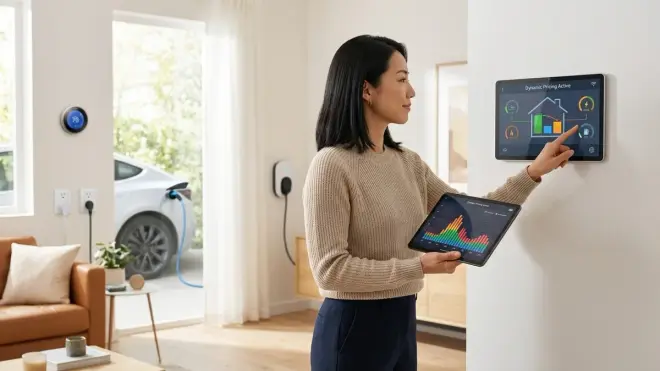
More sophisticated systems query utility APIs hourly or in real time. If your provider offers variable TOU rates—say, 12 cents per kWh overnight, 28 cents during afternoon peak, and 45 cents during "super-peak" heat events—the automation adjusts device priority dynamically. Pseudocode resembles:
IF current_rate < 15_cents_per_kWh:
  enable_all_scheduled_loads()
ELIF current_rate >= 15 AND current_rate < 30:
  enable_only_priority_loads()
  defer_EV_charging()
ELSE:
  disable_non_essential_loads()
  pre_cool_HVAC_if_next_hour_rate_exceeds_40_cents()
This approach demands reliable internet connectivity and introduces latency—API polling intervals range from 5 minutes (fast-response systems like Sense or Emporia Vue energy monitors) to 60 minutes (basic Wi-Fi smart plugs). If connectivity drops, most controllers default to the last-known rate schedule or revert to static TOU windows until service restores.
Protocol choice matters here. Wi-Fi devices (like Shelly smart relays or TP-Link Kasa plugs) communicate directly with cloud services but depend on router stability and can introduce 200-500ms command latency. Zigbee or Z-Wave systems execute locally once rate data reaches the hub, cutting latency to 50-150ms but requiring a hub with API integration (Home Assistant, Hubitat, SmartThings). Matter 1.4 ecosystems theoretically support cross-platform rate-aware automations, though as of early 2026, few utilities publish Matter-native APIs—most rely on RESTful endpoints that hubs translate internally.
Predictive Load Shifting
The most invisible approach: machine learning algorithms observe historical consumption, forecast upcoming demand, and pre-shift loads to minimize cost without manual rule creation. A system might notice you shower daily between 6:30 and 7:15 a.m., then pre-heat water at 5 a.m. when rates are lowest, maintaining temperature until you wake. It detects your habit of dimming living room lights at 8 p.m. and schedules laundry to finish just before, so dryer heat dissipates before HVAC workload increases.
This relies on whole-home energy monitoring (circuit-level devices like the Emporia Vue or Sense panel monitor) combined with local or cloud-based inference engines. Latency expectations: 1-3 seconds for predictive triggers, 10-30 seconds for model updates. Reliability depends on consistent data flow—if sensors lose connectivity for more than 24 hours, accuracy degrades and the system reverts to simpler rule-based logic until sufficient data rebuilds.
Interoperability remains a limitation. Few ecosystems natively share consumption data across brands. A Zigbee smart plug may report wattage to a Hubitat hub, but that data won't automatically flow to a Google Nest thermostat unless you bridge them through Home Assistant with Matter compatibility or a custom MQTT broker. This fragmentation means predictive systems often require vendor lock-in (e.g., staying within the Sense ecosystem) or technical fluency to stitch together API calls and local automation platforms.
Why It Matters
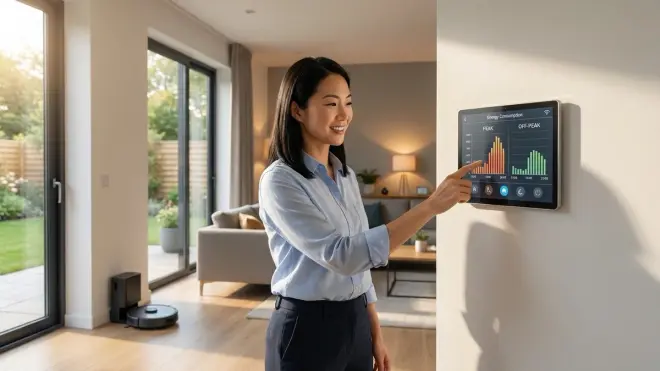
Peak off peak energy automation smart home strategies directly reduce electricity costs—typically 15-30% for households on TOU plans, according to utility demand-response studies. The savings compound over time without lifestyle compromise. You don't sacrifice comfort or convenience; instead, the home absorbs timing complexity invisibly. Climate remains consistent because pre-cooling stores thermal mass before expensive hours. Hot water stays ready because overnight heating anticipates morning demand. Laundry finishes on schedule because the system queued it during a midnight rate dip.
Beyond cost, automation alleviates decision fatigue. Manually deferring tasks—remembering to delay the dryer, adjusting thermostat setpoints hourly—imposes cognitive load that most people abandon within weeks. Invisible automation removes that friction. The thermostat recalibrates before you notice, the EV charger pauses during super-peak surges, the water heater recharges while you sleep. The home anticipates rather than reacts.
There's also a grid-scale benefit: widespread TOU automation flattens demand curves, reducing strain on infrastructure and minimizing reliance on peak-hour fossil fuel plants. When thousands of homes defer appliance loads by two hours, utilities avoid firing up expensive natural gas peaker plants. This environmental dividend happens passively, as a side effect of optimized household logic.
However, effectiveness hinges on rate structure alignment. Flat-rate plans offer no incentive—automation generates zero savings if every kilowatt-hour costs the same regardless of timing. Homes with minimal controllable loads (all-gas appliances, no EV, resistive heating on fixed schedules) see marginal benefit. And misaligned automation—say, pre-cooling aggressively when outdoor temperatures peak simultaneously with rates—can backfire, increasing HVAC runtime and negating savings. Smart thermostats designed for TOU optimization account for these nuances, but generic timers do not.
Types & Variations
TOU automation manifests in several architectures, each trading visibility for capability.
Device-level scheduling embeds logic directly into endpoints. A [Wi-Fi-enabled water heater controller] allows you to program off-peak heating cycles via smartphone app, requiring no hub. A Matter-compatible smart plug restricts activation to defined hours. These solutions remain protocol-agnostic (single-device Wi-Fi or Thread) but lack cross-device coordination—your water heater doesn't know your EV is charging, risking simultaneous high loads that spike demand charges.
Hub-centralized orchestration consolidates rules in a controller like Home Assistant, Hubitat, or SmartThings, which manages Zigbee, Z-Wave, and Matter devices simultaneously. You define hierarchical logic: if rate > $0.30/kWh, then disable pool_pump AND EV_charger AND delay_dishwasher. This enables whole-home prioritization—essential loads (refrigerators, medical equipment) override automation, while deferrable loads queue based on cost impact. Latency typically remains under 200ms for local Zigbee/Z-Wave commands, though Wi-Fi devices add cloud-dependent delays.
Utility-integrated systems receive pricing signals directly from providers. Some utilities offer demand-response APIs that push event notifications (e.g., "super-peak event 4-7 p.m. tomorrow"). Compatible hubs ingest these triggers and adjust device behavior automatically—thermostats pre-cool homes before the event, batteries discharge to offset grid draw, non-essential circuits shut off. Reliability depends on API uptime and hub connectivity; if either fails, automation reverts to static schedules. Protocol compatibility varies: most use RESTful APIs over Wi-Fi/Ethernet to reach the hub, which then translates commands to Zigbee/Z-Wave/Matter endpoints.
Predictive AI platforms abstract rate logic entirely. Services like Sense Energy Monitor with Solar integration or OhmConnect analyze usage patterns, forecast pricing windows, and execute optimizations without manual rule creation. These systems shine in dynamic pricing markets (real-time rates that fluctuate every 15 minutes) but require continuous internet connectivity and trust in proprietary algorithms—you sacrifice transparency for convenience. Fallback behavior often defaults to conservative static schedules if cloud services disconnect.
Each approach suits different aesthetic and technical tolerances. Device-level scheduling remains the most invisible—no hub clutter, no centralized panel—but offers limited sophistication. Hub orchestration demands a concealed controller, often tucked in utility closets or behind built-in cabinetry, but enables nuanced whole-home logic. Utility-integrated systems require compatible providers (not universally available) and expose you to API deprecation risk. Predictive AI feels the most magical—automation emerges without setup—but surrenders control and visibility into decision-making.
Frequently Asked Questions
Does peak off peak energy automation work without internet connectivity?
Yes, but functionality degrades significantly. Local protocols like Zigbee, Z-Wave, and Thread execute static TOU schedules entirely offline—your hub applies time-based rules without cloud dependency, maintaining sub-second latency. However, dynamic pricing integrations that query utility APIs require internet access; if connectivity drops, the system reverts to cached rate schedules or pre-programmed fallback windows. Thread and Matter 1.4 mesh networks maintain device communication even if the border router loses WAN connectivity, so time-based triggers continue firing. Wi-Fi-only devices typically lose all automation capability during outages unless they support local LAN control.
Which smart home protocol offers the lowest latency for TOU automation?
Zigbee and Z-Wave Plus deliver 50-150ms command latency for local TOU automation, significantly faster than Wi-Fi devices (200-500ms) that route commands through cloud services. Thread-enabled Matter 1.4 devices approach Zigbee speeds (80-200ms) when executing locally via a border router, but interoperability across ecosystems introduces variable delays depending on bridge translation overhead. For time-sensitive load shifting—like pausing an EV charger milliseconds before a demand charge threshold—Zigbee or Z-Wave centralized hubs (Home Assistant, Hubitat) remain the most responsive. Wi-Fi suffices for coarse scheduling (hourly rate changes), but fine-grained control demands mesh protocol reliability.
Can I mix Zigbee, Z-Wave, and Matter devices in one TOU automation system?
Yes, with the right hub and careful planning. Controllers like Home Assistant or Hubitat support multi-protocol orchestration, allowing you to combine Zigbee smart plugs, Z-Wave thermostats, and Matter-compatible appliances under unified TOU logic. However, devices from different protocols cannot communicate directly—they rely on the hub to translate and relay commands, introducing 100-300ms latency overhead compared to single-protocol systems. Matter 1.4's promise of universal interoperability improves this in theory, but as of early 2026, many devices still require protocol-specific bridges, and not all ecosystems honor Matter's local control mandate. Expect to test fallback behavior rigorously, as mixed-protocol systems introduce more failure points than homogeneous Zigbee or Z-Wave networks.
What happens to TOU automation if the hub loses power during peak hours?
Fallback behavior depends on device architecture and protocol. Zigbee and Z-Wave devices retain their last state but cannot execute new automations until the hub restores—a water heater that was heating continues until its internal thermostat stops it, but won't restart even if rates drop. Thread mesh networks recover faster because any powered Thread node can relay commands once the border router reboots, often within 5-15 seconds. Wi-Fi smart plugs typically default to "off" or "last state" depending on firmware—some manufacturers offer configurable power-loss behavior (e.g., "resume off-peak schedule after 60 seconds"). Battery-backed hubs or UPS systems eliminate this vulnerability entirely, maintaining automation logic through grid outages. For critical loads, consider hybrid systems: a Zigbee relay with a mechanical timer as backup, or a smart plug with energy monitoring that reports anomalies to a secondary controller.
Do TOU automation systems require monthly subscriptions or cloud services?
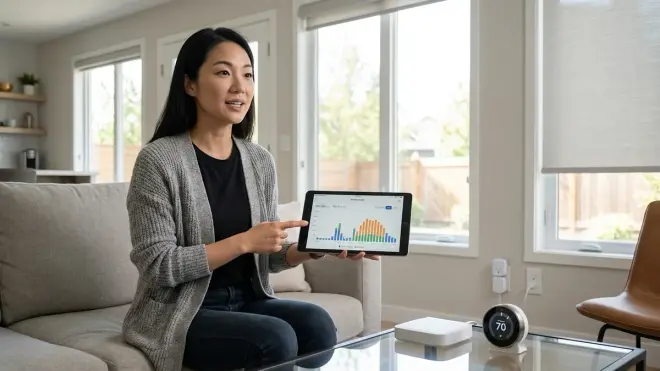
Not necessarily—local automation platforms eliminate recurring fees but demand technical setup. Cloud-dependent systems like Sense Energy Monitor or utility-integrated demand-response services often require subscriptions (around $5-15/month in 2026) for real-time pricing APIs and predictive analytics. However, open-source hubs like Home Assistant running locally orchestrate TOU logic entirely offline once configured, with no monthly costs beyond electricity to power the server. Zigbee and Z-Wave devices operate subscription-free, executing schedules stored on the hub. Matter 1.4 devices theoretically enable subscription-free cross-platform control, though some manufacturers lock advanced features behind cloud tiers. The trade-off: local systems demand upfront investment in learning automation syntax and maintaining hardware, while cloud services offer polished interfaces and automatic updates at ongoing cost.
Summary
Peak off peak energy automation smart home systems translate utility rate structures into invisible household choreography—deferring high-load tasks to affordable hours, pre-conditioning spaces before rates climb, and orchestrating devices without manual intervention. The technology layers protocols (Zigbee, Z-Wave, Thread, Matter 1.4, Wi-Fi) with conditional logic (static schedules, dynamic pricing APIs, predictive algorithms) to reduce electricity costs 15-30% while maintaining comfort and aesthetic invisibility. Effectiveness depends on rate plan alignment, protocol compatibility, and thoughtful fallback design—homes without controllable loads or flat-rate billing see minimal benefit, and mixed-protocol ecosystems introduce latency variability that demands careful testing. The best implementations feel absent: climate stays consistent, water runs hot, laundry finishes on schedule, yet monthly bills shrink as the home absorbs timing complexity behind walls and within routines. The machinery disappears; the savings compound quietly, month after month, without disrupting the rhythm of living.